
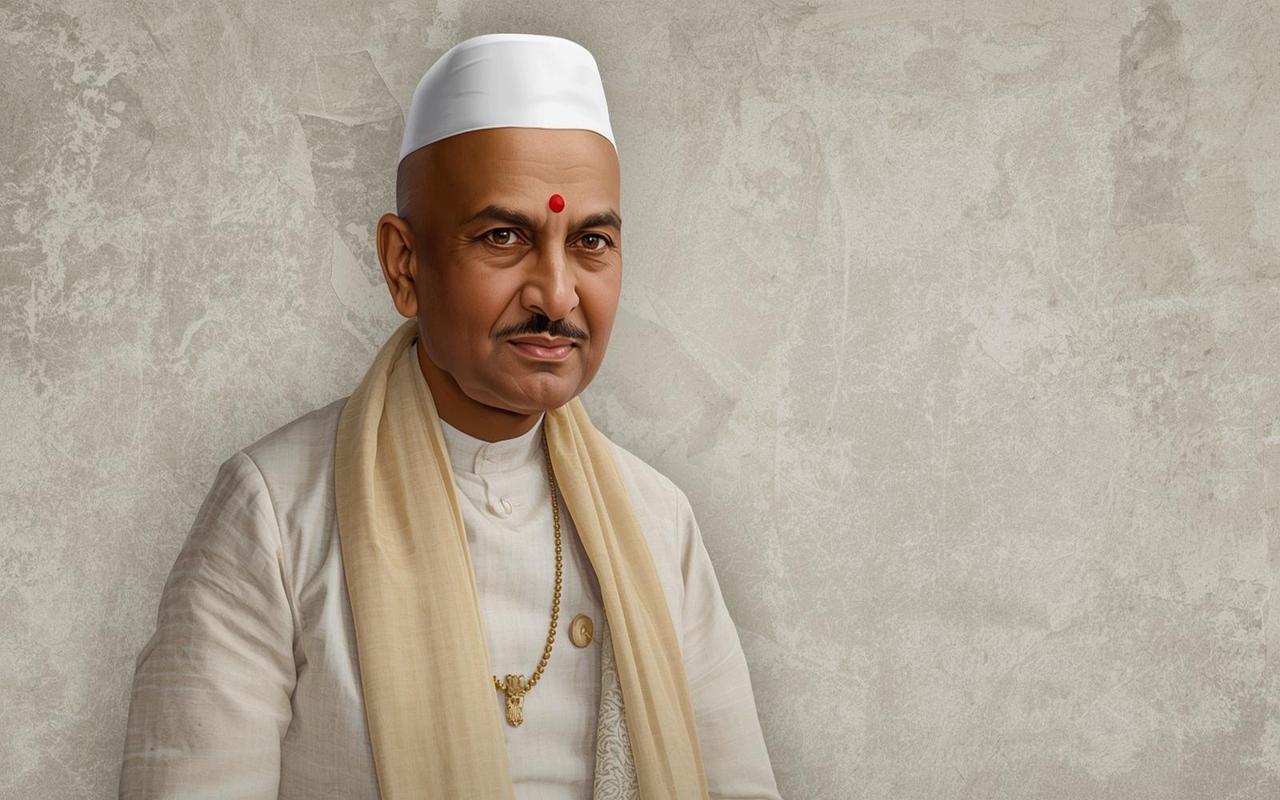
 The year was 1920. Across India, the air was thick with uncertainty and change. The First World War had ended, the Montagu–Chelmsford reforms had been introduced, and discontent simmered among the masses. The Jallianwala Bagh massacre of 1919 had shaken the conscience of the country. A new tide of politics was rising, one that would soon be defined by Mahatma Gandhi’s non-cooperation movement. But before Gandhi could command the national stage fully, there was still the towering figure of Lokmanya Bal Gangadhar Tilak, the Lion of India whose roar had awakened a nation.
Tilak had returned from Mandalay years earlier, his health weakened but his determination sharpened. His philosophy of karma yoga, the gospel of action he had explained in the Gita Rahasya, had already seeped into the minds of the people. Yet Tilak was not one to remain in the shadows of philosophy alone. He returned with full energy to the political fight. From the courts to the streets, from Congress to the newspapers, he was determined to see India claim her rightful place among the free nations of the world.
When he returned to active politics after his imprisonment, Tilak found a Congress party divided. Some leaders still followed the moderate path, choosing reforms and petitions to the British Crown while others, inspired by Tilak’s earlier fire, battled for more direct action. Tilak, with the wisdom of his years and with the experiences of battles he had fought, sought unity. He was no longer the young firebrand who demanded immediate swaraj at any cost. He was a seasoned leader who knew that without bringing people together, the dream of freedom would remain a dream.
It was in this spirit that he launched the Home Rule Movement in 1916, alongside Annie Besant. The idea was simple yet revolutionary: India must govern herself. Home Rule was not complete independence, but it was a giant step in that direction. Through fiery speeches, organized campaigns, and the powerful press, Tilak carried the message of self-government into every corner of the land and his slogan, “Swaraj is my birthright, and I shall have it,” it was becoming a common belief among Indians.
Even the British knew about this danger which Tilak can make them face. Edwin Montagu, the Secretary of State for India, privately admitted that Tilak was “the most dangerous man in India”, not because of violence, but because of his ability to inspire millions to believe in their own strength. The colonial system could withstand arms and uprisings, but the awakening of a nation’s spirit was a threat which it could not afford to contain.
In 1918, as the First World War ended, Tilak saw a new chance to push India’s case. Despite his weak health at the age of sixty-two, he sailed to England. This time not as a student or a prisoner, but a leader carrying the voice of his nation. In London, he met politicians, spoke to the press, and urged that India be treated with dignity and given real reforms. He did not win everything he wanted as no one in the world could do that, but his presence itself sent a strong message. Tilak made sure that wherever he went, he carried India with him.
But his body was beginning to betray him. Years of imprisonment, relentless work, and the weight of carrying a nation’s hopes had taken their toll. By 1919, he was visibly frail, though his spirit burned as brightly as ever. Gandhi had by then risen as the new force of Indian politics. The two men met, and in that meeting, Tilak recognized in Gandhi the continuation of the struggle he had carried for decades. Though their methods were different, their goal was the same, swaraj for India. Tilak gave his blessings to Gandhi as he knew that the torch of leadership was passing. A true leader never seeks immortality for himself but always ensures continuity for the cause.
And then came the final year. 1920 was a year of turmoil. The wounds of Jallianwala Bagh were fresh, the Khilafat agitation was gaining momentum, and the Congress was preparing for the launch of the non-cooperation movement. In the midst of this, Tilak’s health rapidly declined. He suffered from diabetes and severe weakness. Yet even as his body failed, his mind never wavered. He continued to write, to meet people, to guide, to inspire.
For the people of India, Tilak was not just a politician or a leader. He was Lokmanya the man whom the people themselves had accepted as their own, the leader who belonged not to the elite but to the masses.
On 1st August 1920, as dawn broke over Bombay, Bal Gangadhar Tilak breathed his last. He was seventy-four. The news spread like wildfire, and with it, a wave of grief swept across India. Gandhi, deeply moved, called Tilak “the Maker of Modern India.” Nehru, still young in politics, later wrote of Tilak’s unmatched power to awaken the people. Newspapers mourned him as the “Father of Indian Unrest,” a title the British had once used in fear but now embraced by the people with deep respect..
The funeral that followed was unprecedented. When Tilak passed away on 1 August 1920 in Bombay, an ocean of people filled the streets to bid him farewell. Contemporary reports described the funeral procession as one of the largest the city had ever witnessed. The streets overflowed, the air filled with chants of “Lokmanya Tilak ki jai!” His funeral procession was not one of silence, but of a people declaring their undying love. In that moment, Tilak was no longer a man. He was a legend, a symbol, a spirit woven into the fabric of India’s destiny.
But his death was not an end. It was a beginning. For Tilak’s life had planted seeds that would continue to grow. The philosophy of action he had preached became the foundation on which Gandhi’s mass movements would stand. The Home Rule league he had created merged into the Congress, fueling the larger movement for independence. His writings, especially the Gita Rahasya, continued to inspire generations, reminding Indians that freedom is not given, it is earned through relentless duty.
Even decades later, people draw strength from his words. His insistence that dharma is not in passive resignation, but active responsibility found echoes in every struggle India faced like from social reforms to political change. To students, he was a teacher, to lawyers, a model of courage, to revolutionaries, a source of fire. And for the common man, he was a voice of hope.
And perhaps that is the true measure of his greatness. Tilak was not confined to a single role. He was a lawyer who argued against unjust laws, a teacher who educated through newspapers, a philosopher who reinterpreted the Gita, and a leader who stood unbent before an empire. His genius lay in weaving all these roles together into one unbroken commitment which was the service of the motherland.
As we look back today, a century later, Tilak still speaks to us. His cry for swaraj reminds us that freedom is not something to be begged for but something to be claimed with conviction. His Gita Rahasya tells us that duty is not a burden but the very path to liberation. His political career shows us that unity, courage, and clarity of vision can shake even the mightiest of empires.
When Gandhi launched the non-cooperation movement soon after Tilak’s death, it felt as if history itself had arranged the succession. The Lion had roared, awakened the nation, and passed on. Now it was time for another voice, another method, another phase of the struggle. But beneath Gandhi’s quiet strength, one could still hear the echo of Tilak’s thunder: “Swaraj is my birthright, and I shall have it.”
In the end, Tilak’s legacy was not just in the movements he led or the battles he fought. It was in the spirit he unleashed, a spirit that refused to bow, refused to be silent, refused to accept injustice as fate. That spirit carried India through the storms of the 1920s, 30s, and 40s, until in 1947, the dream of freedom became reality.
And so, as we close this chapter, we remember not just a man but a force. Bal Gangadhar Tilak Lokmanya, the voice of the people, the Lion of India. His body rests in history, but his words, his fire, his vision they live on, eternal, in the heartbeat of the nation he helped awaken.
But the story does not end here. The baton of justice was picked up by other lawyers, who carried the fight forward in courtrooms, in assemblies, and on the world stage. After Tilak, one such towering figure was Sir Chettur Sankaran Nair the lawyer who dared to challenge the British over the Jallianwala Bagh massacre and turned law into a weapon of resistance.
This is where our journey now moves.