
The Classroom to Courtroom Program
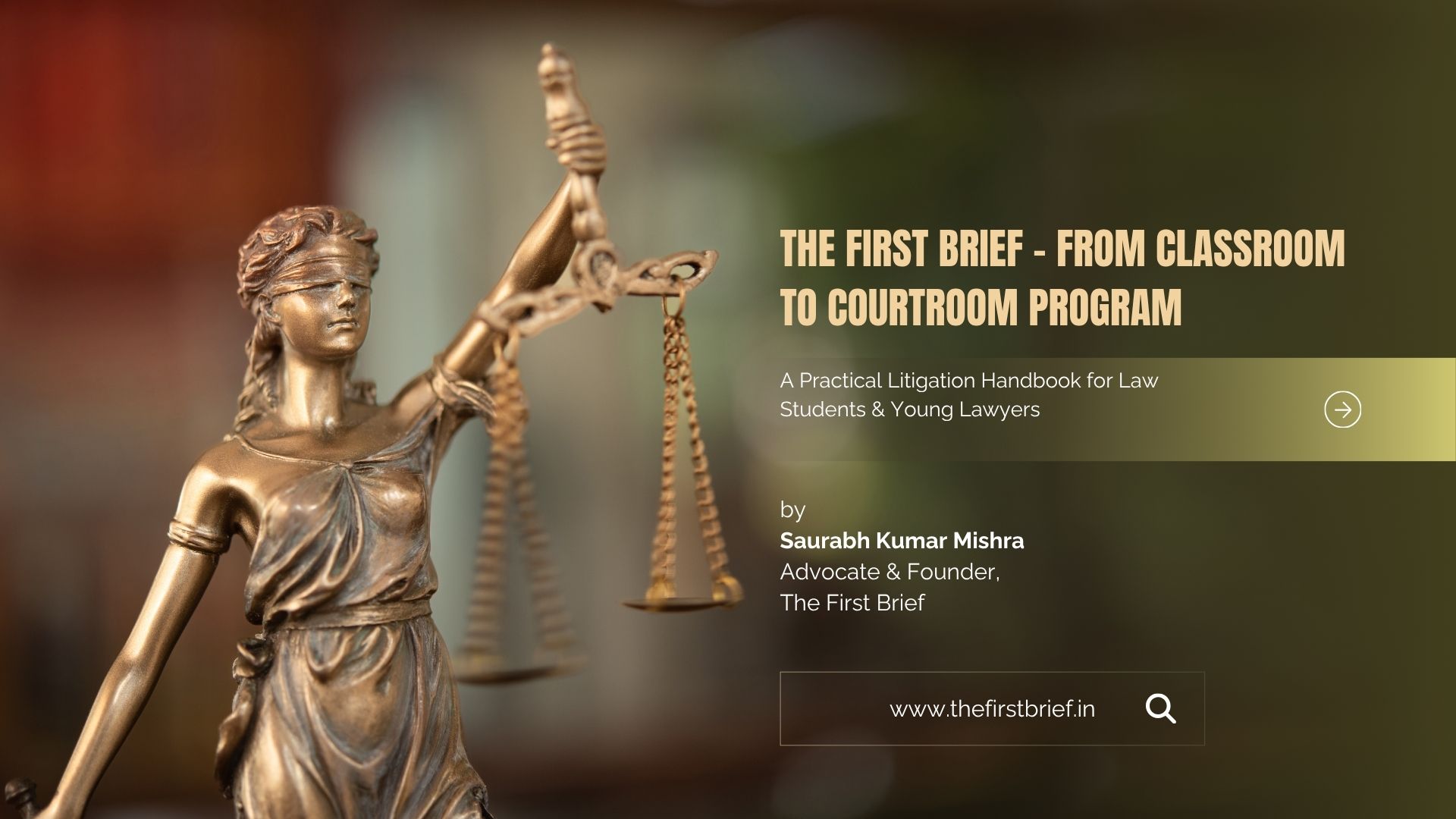
About the Classroom to Courtroom Program
The transition from a law school to court practice is more difficult than many students expect. While legal education teaches us principles and laws, the practical aspects of litigation like filing a case, understanding court procedure, dealing with registry objections, conducting legal research, drafting applications, courtroom etiquettes and appearing before courts are rarely explained in a structured manner.
The Classroom to Courtroom program has been created to bridge that gap. This handbook is designed to provide practical guidance to law students, interns, young advocates and anyone who wishes to understand how litigation functions beyond textbooks.
Through simplified explanations, practical examples, model formats, drafting guidance, filing procedures, legal research techniques, courtroom insights, and basics of contract drafting, this handbook aims to help readers develop confidence in navigating the early stages of litigation practice.
So, whether you are applying for your first internship, your first court appearance, or simply wish to understand how matters move through the legal system, this handbook has been prepared as a practical companion for your journey from the classroom to the courtroom.
What the Program Covers
Module 1: The Anatomy of Indian Courts
Understand how Indian courts function, including their structure, layout, daily rhythm, and the offices that keep the judicial system running. Learn which court handles different types of cases, how to navigate a courtroom, read a cause list, and file matters correctly.
Module 2: Your First Case File - Documents and Paperwork
Learn how a professional case file is prepared, from selecting the right paper and stamps to arranging the index, affidavits, office copies, and supporting documents. Understand the purpose of each document and avoid common filing mistakes.
Module 3: Drafting Your First Legal Documents
Learn how to draft essential legal documents used in day-to-day litigation, including petitions, applications, Hazira, and adjournment petitions. Understand drafting structure, avoid common mistakes, and build documents with clarity and purpose.
Module 4: Filing & Procedure – Online and Offline
Learn the complete filing process, from preparing and submitting petitions and applications to responding to office objections, curing scrutiny defects, tracking case status, and understanding what happens after filing until a matter is registered and listed before the court.
Module 5: Courtroom Etiquette & Advocacy
Learn the practical aspects of courtroom conduct, including professional etiquette, court manners, communication, and advocacy basics. Develop the confidence to conduct yourself with composure, credibility, and professionalism inside the courtroom.
Module 6: Intern to Independent
Understand the realities of the early years of legal practice, from internships and juniorship to independent work. Learn how to navigate professional growth, build trust, develop confidence, and approach your legal career with greater clarity and direction.
Module 7: Legal Research for Litigation
Learn how to conduct effective legal research by connecting facts, statutes, and precedents to build stronger arguments. Understand the practical use of SCC Online, Manupatra, eCourts, and other research resources, while developing research strategies for different types of cases.
Module 8: Contract Drafting - The Basics
Learn the structure, language, and logic of professional contract drafting. Understand the purpose of key clauses, identify common drafting mistakes, and develop the ability to draft and review basic commercial agreements with greater confidence.
Inside the Program
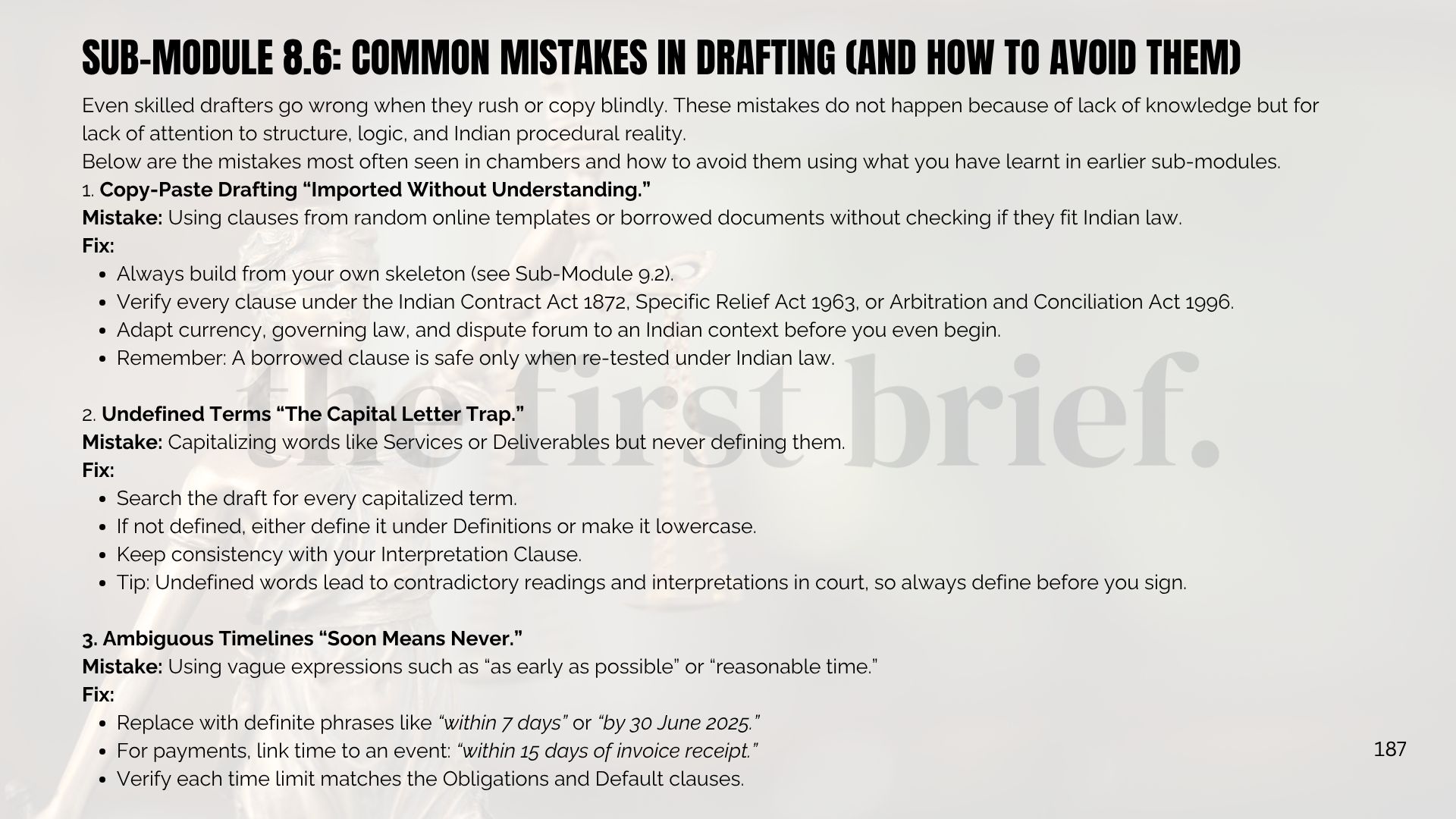
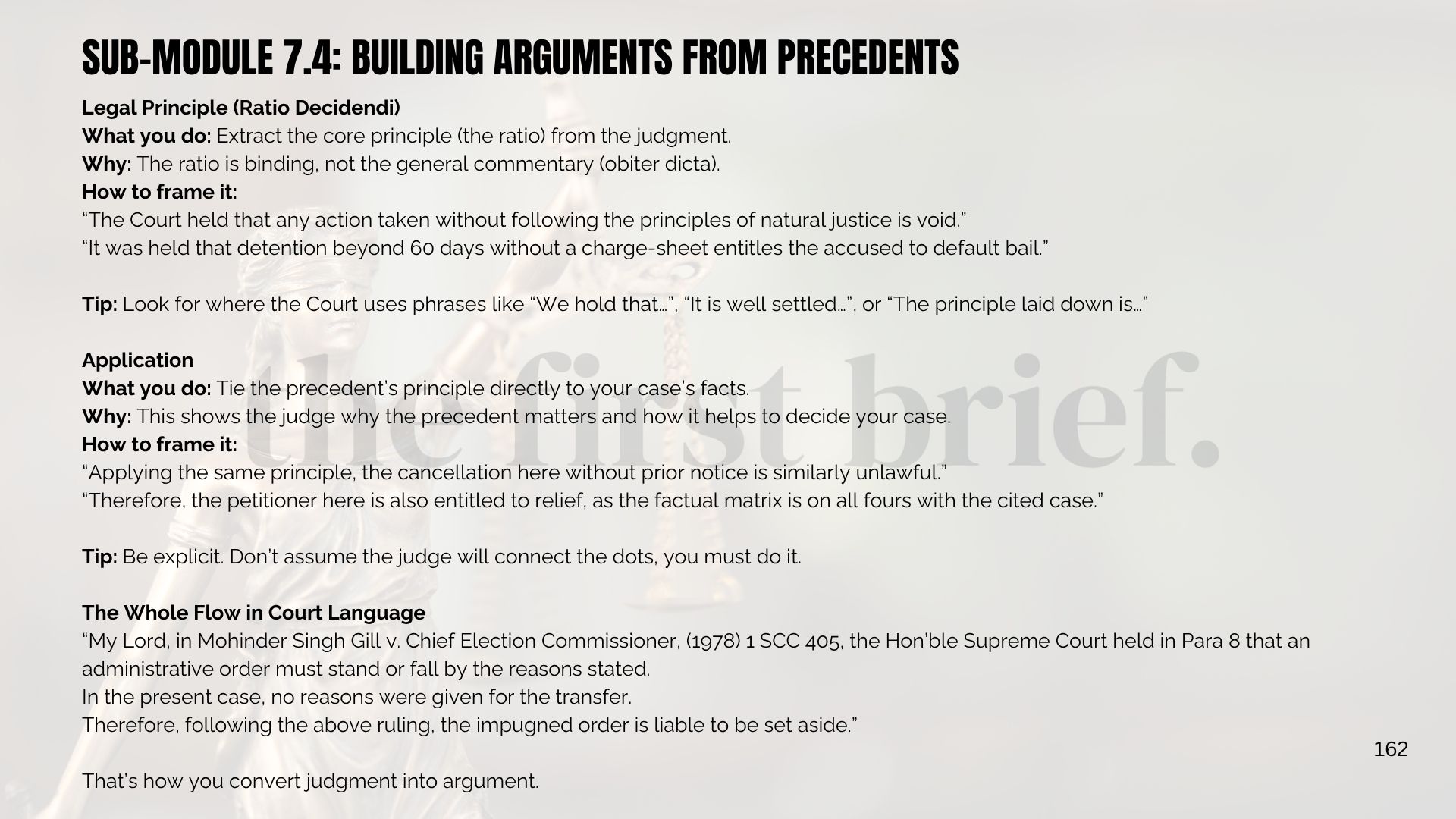
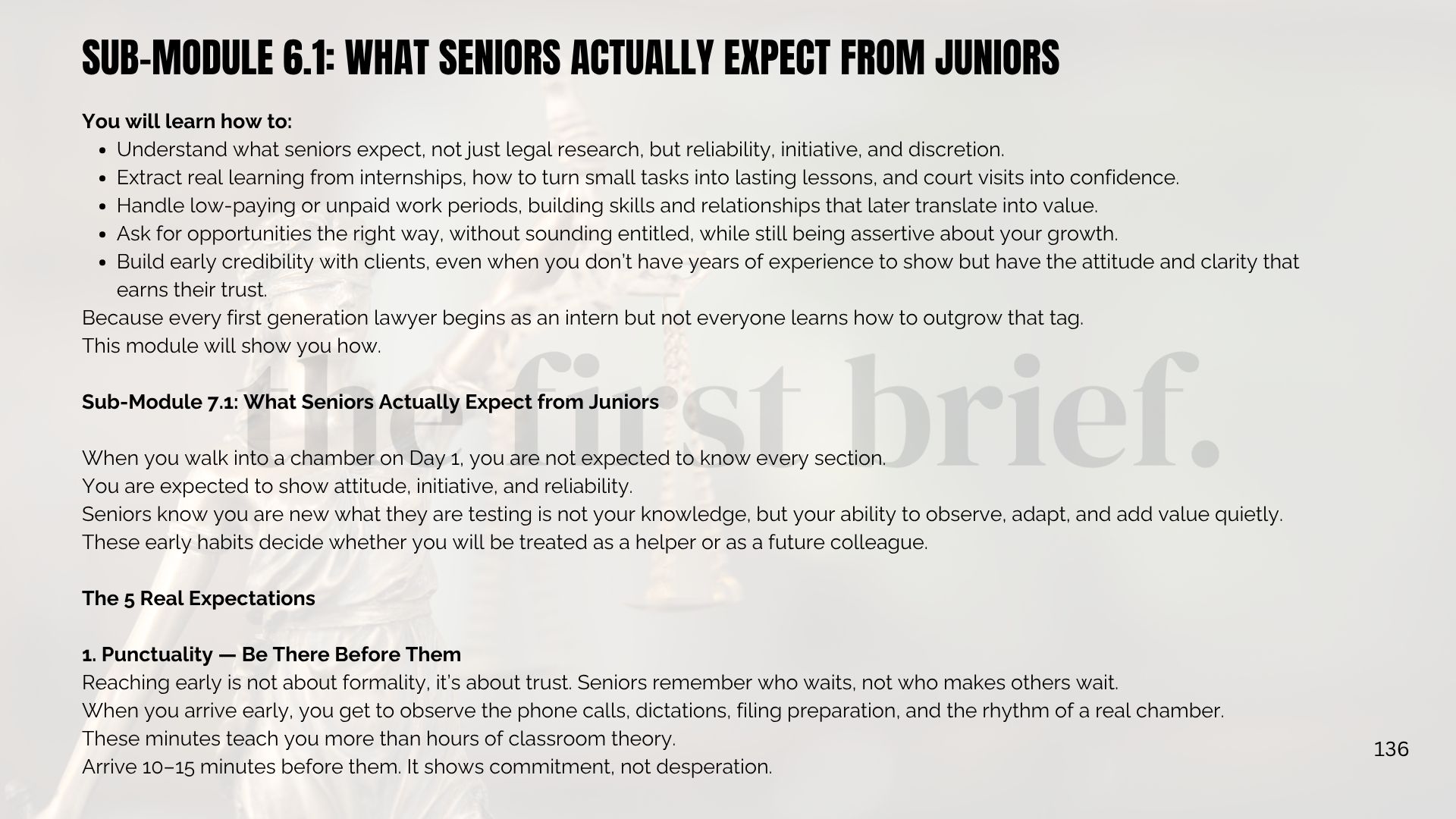
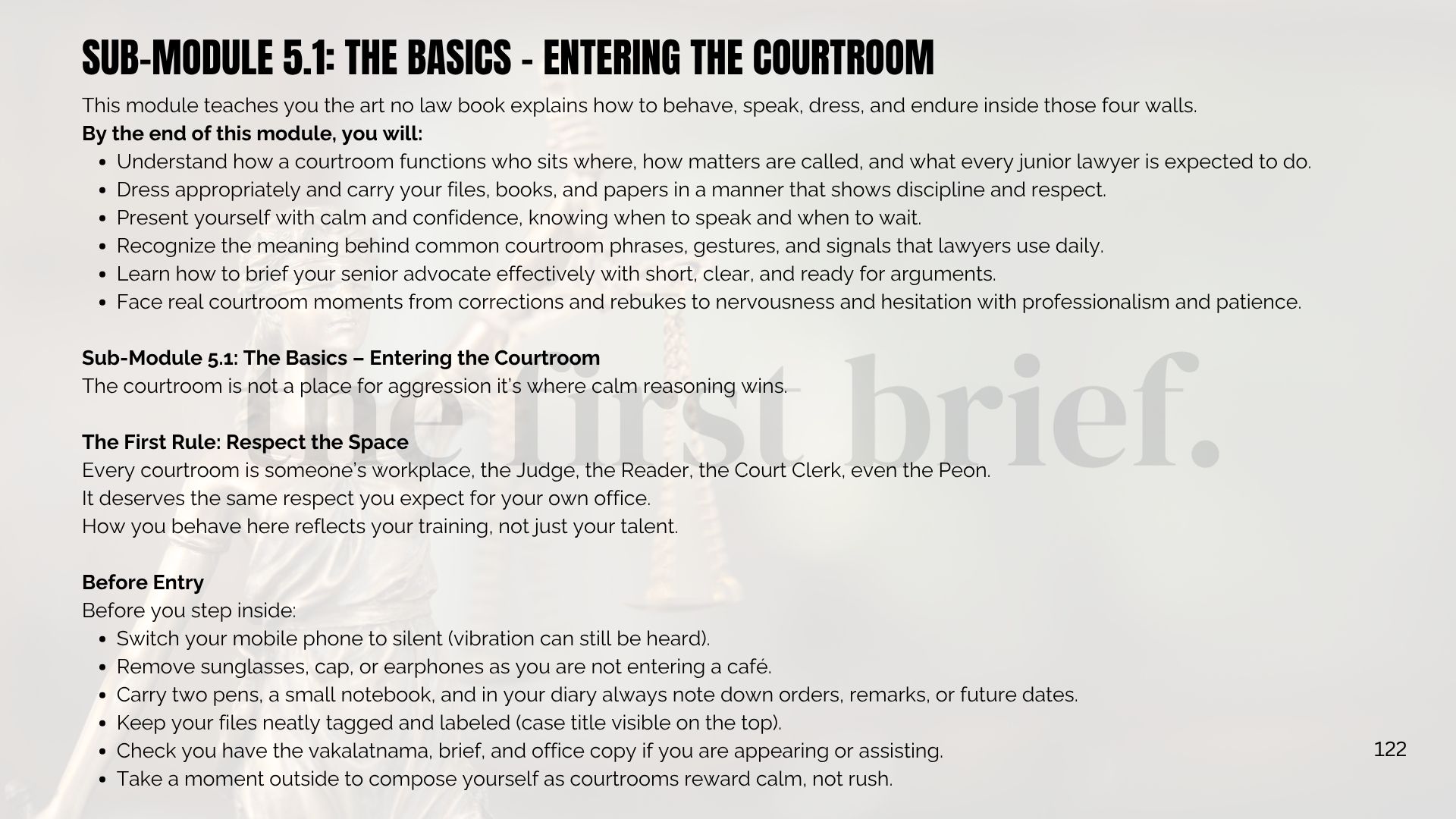
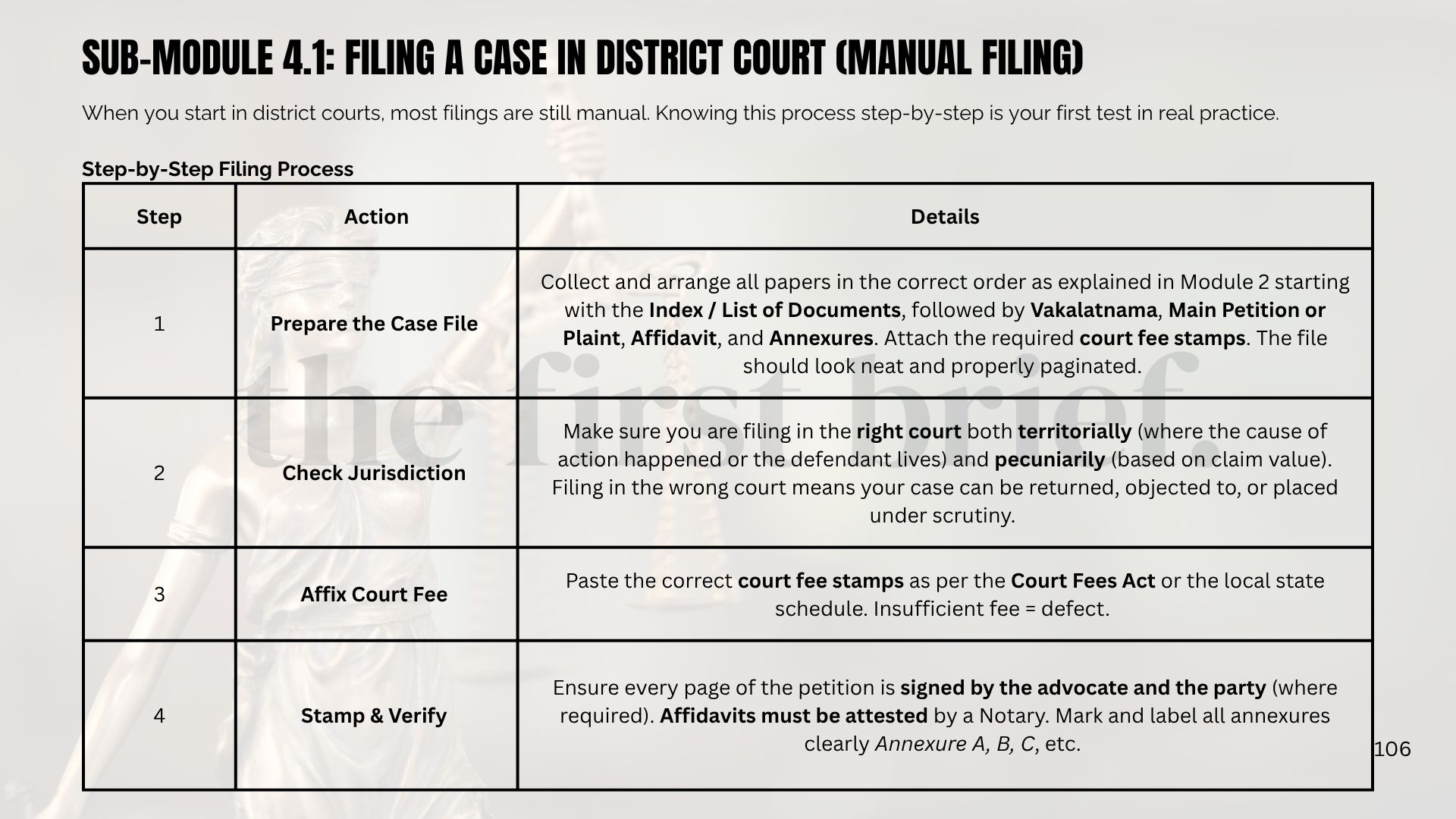
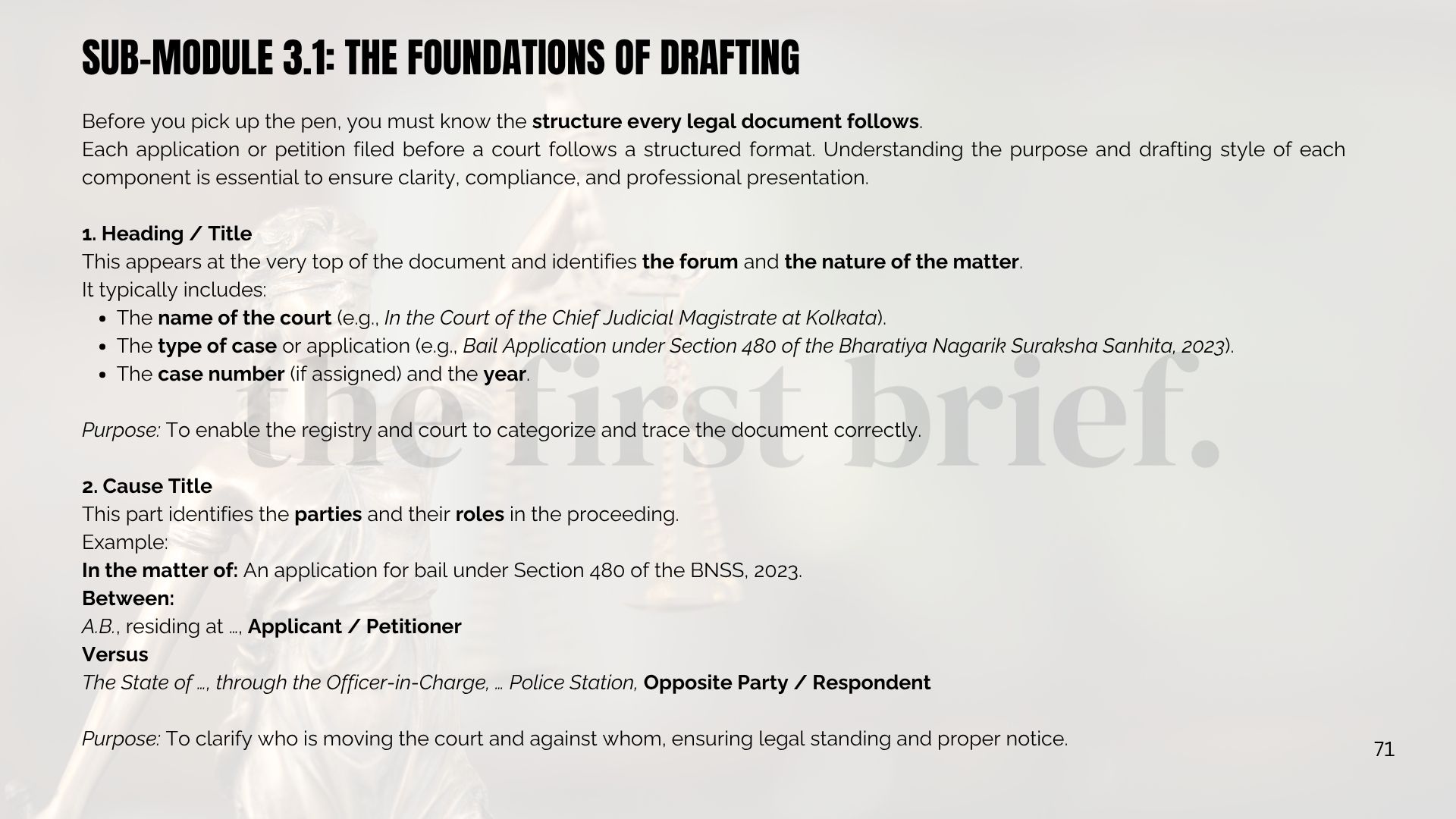
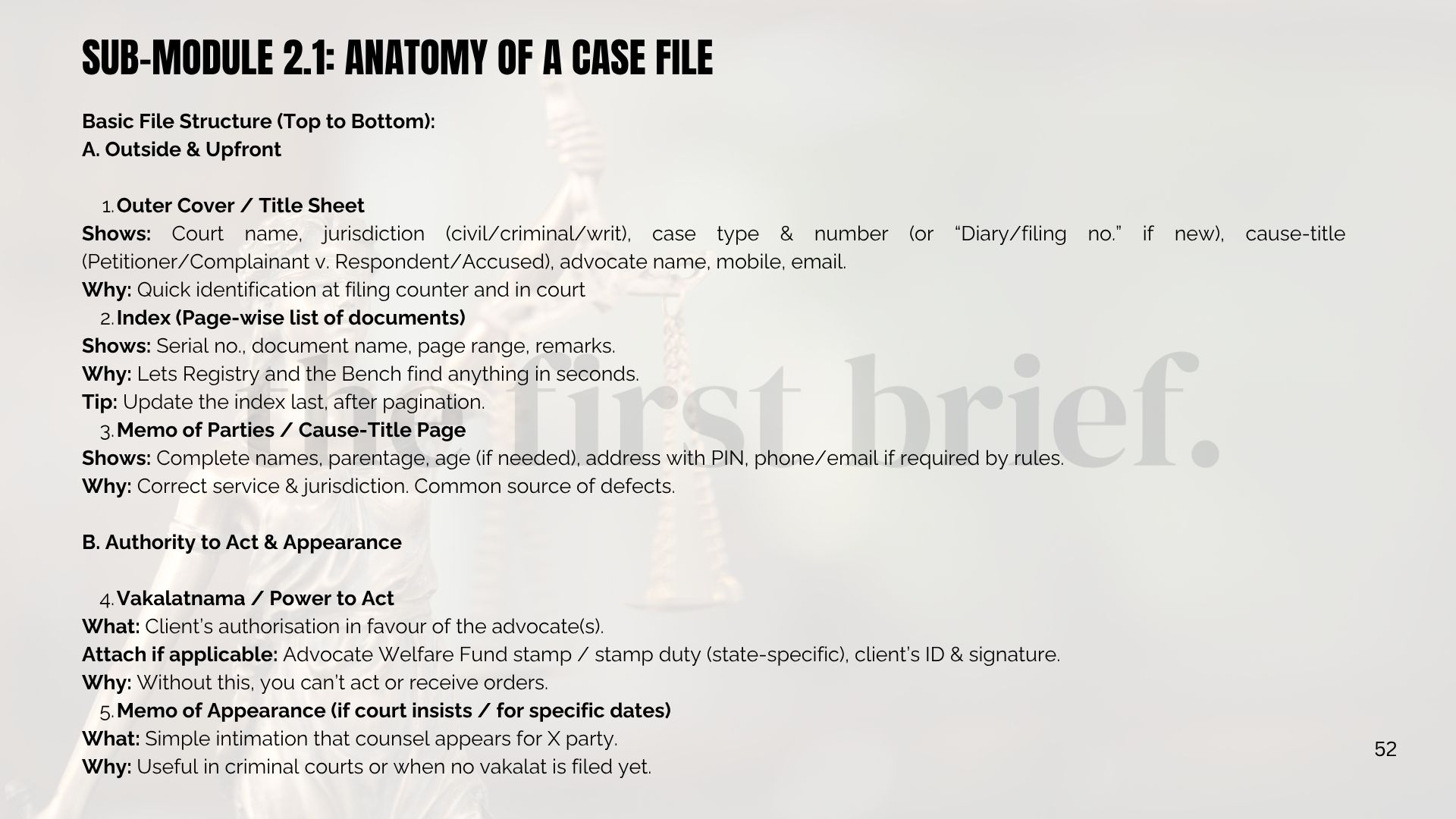
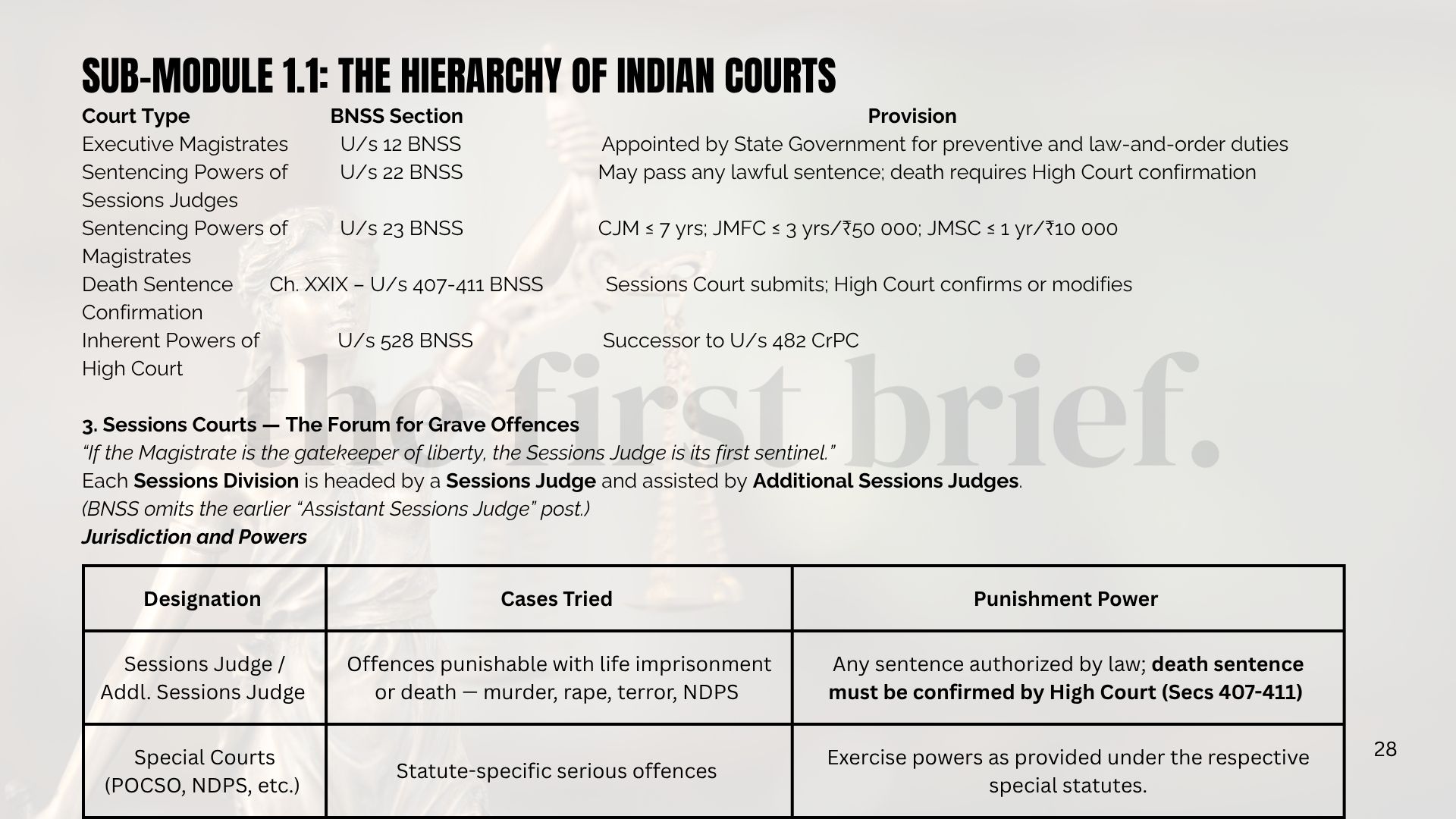
Explore selected pages from The Classroom to Courtroom Program and discover how practical litigation concepts, drafting formats, filing procedures, legal research techniques, courtroom guidance, and contract drafting fundamentals have been presented throughout the handbook. These previews offer a glimpse into the practical and structured approach followed across all eight modules.
Who Is This Program For?
The Classroom to Courtroom Program has been designed for law students, interns, junior advocates, first-generation lawyers, and anyone seeking a practical understanding of litigation beyond textbooks. Whether you are applying for your first internship, your first court appearance, or your early years of independent practice, this program aims to bridge the gap between legal education and courtroom reality.
Why This Program?
When I entered the legal profession, I realized that there was a huge difference between what we learn in law school and what actually happens inside a court.
We spend years studying laws, sections, judgments, and legal principles. But when it comes to practical court work, many of us are left to figure things out on our own. How is a case file prepared? Where do you file a matter? What happens after filing? How do you deal with office objections? How do you draft your first petition? How do you conduct legal research for an actual case?
These are questions that almost every young lawyer faces at some point.
For many students and first-generation lawyers, the beginning of the journey can feel confusing. There is excitement, but there is also uncertainty. Sometimes, the biggest challenge is not the law itself but the fear of making mistakes because no one has properly explained how things work in practice.
The Classroom to Courtroom Program was created with a simple objective: to make that journey a little easier.
This program does not promise to teach everything about litigation. No single book can do that. Litigation is learned over years of practice, observation, mistakes, and experience. However, if this handbook can help someone understand the basics of court practice, avoid a few common mistakes, and walk into a courtroom with a little more confidence than before, then it has served its purpose.
The aim is simple which is to help bridge the gap between legal education and practical litigation practice, one step at a time.
Program Details
Format: Digital PDF Handbook
Length: 200+ Pages
Modules: 8 Practical Modules
Language: English
Designed For: Law Students, Interns, Junior Advocates & First Generation Lawyers
Focus Areas: Litigation Practice, Drafting, Filing Procedure, Courtroom Etiquettes, Legal Research & Contract Drafting
Access: Digital Download
What Makes This Program Different?
Unlike traditional law books that focus primarily on legal theory, The Classroom to Courtroom Program focuses on the practical side of legal practice. The program combines litigation procedure, drafting, filing, legal research, courtroom understanding, and professional insights in a structured format designed specifically for beginners.
About the Author
Saurabh Kumar Mishra is a practicing advocate engaged primarily in litigation and legal drafting. Through The First Brief, he seeks to simplify practical legal learning and help bridge the gap between legal education and courtroom practice.
The Classroom to Courtroom Program has been developed from practical observations, professional experience, and the challenges commonly faced by law students, interns, and young advocates during the early stages of their legal journey.
Get Your Copy
The First Brief’s The Classroom to Courtroom Program
A Practical Litigation Handbook for Law Students, Interns & Young Advocates
• Digital PDF Format
• 200+ Pages
• 8 Practical Modules
Regular Price: ₹499/-
Launch Price: ₹299/-
Available at the launch price for a limited period.
Upon successful payment, the handbook will be delivered to the email address provided during checkout.
Frequently Asked Questions
Q1. Is this a physical book?
Ans. No, The Classroom to Courtroom Program is a digital PDF handbook that will be delivered electronically after purchase.
Q2. Who is this handbook for?
Ans. The handbook has been designed for law students, interns, junior advocates, first-generation lawyers, and anyone seeking a practical understanding of litigation beyond textbooks.
Q3. Do I need prior court experience to benefit from this program?
Ans. No, the handbook has been written in a simple and structured manner, making it suitable for both beginners and young practitioners.
Q4. Does the handbook include practical formats and examples?
Ans. Yes, the handbook includes practical guidance, drafting formats, examples, checklists, procedural explanations, and real-world insights from litigation practice.
Q5. How will I receive the handbook after purchase?
Ans. The handbook will be delivered digitally after successful purchase. Further instructions regarding access and delivery will be provided after payment.
Q6. Can I get a refund after purchase?
Ans. Due to the digital nature of the product and the fact that the handbook is delivered electronically, purchases are generally non-refundable once access has been provided. However, if you face any technical difficulty in receiving or accessing the handbook, reasonable assistance will be provided to resolve the issue.

Popular Search
Copyright © 2026 The First Brief | Powered by One Devs