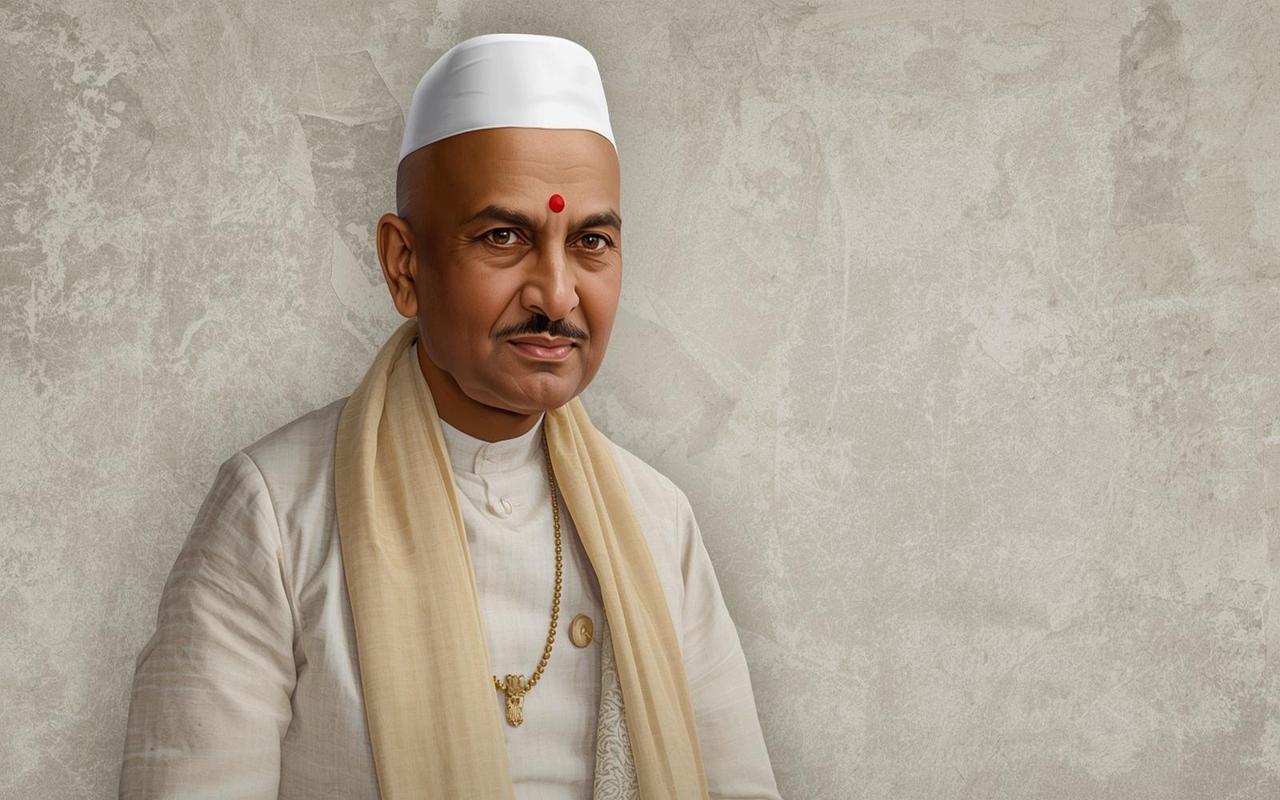
The story of Lokmanya Tilak after Mandalay is not the story of a man broken by prison. It is the story of a man tempered by fire, emerging with sharper conviction and deeper clarity. Six years in exile had only refined his thought, given him the silence to write, and prepared him for the battles ahead. When he returned to India in 1914, the world itself had changed. The First World War was tearing Europe apart, the British Empire was stretched thin, and the Indian freedom struggle was entering a new phase. Tilak, though older in years, came back with a renewed energy, ready to rejoin the movement he had helped ignite.
His return was nothing short of electrifying. Crowds welcomed him, garlanding him, hailing him as Lokmanya the leader accepted by the people. For them, this was not just the return of a political figure. This was the return of a teacher who had endured suffering for their cause, a leader who had stood by his words, and a thinker who had given India the strength of the Gita in its darkest hour. Tilak knew the moment demanded more than fiery speeches. It demanded strategy, unity, and the wisdom to channel India’s restless energy.
He resumed his political role with remarkable tact. Though he remained a radical at heart, Tilak now spoke often of balance and cooperation. He sought to mend the rift between the moderates and extremists in the Congress, realizing that division weakened the movement. His vision was clear: independence could not be won by a handful of fiery rebels alone, nor by cautious petitions alone. It would take the combined force of united people. His efforts to bridge these divides reflected not compromise, but maturity the understanding that Swaraj required both passion and patience.
Tilak also recognized the importance of law as a weapon in this phase of struggle. He set up the Home Rule League in 1916, a political platform that worked tirelessly to spread the demand for self-rule across the nation. Unlike earlier movements, which were often limited to elite circles, the Home Rule campaign reached deeper into the Indian public. Villages, towns, students, and workers all began to speak the language of Swaraj. Tilak’s genius was not merely in raising slogans but in institutionalizing the spirit of self-rule into an organized movement. He gave people not just a dream but also a structure through which that dream could be pursued.
One of the most defining moments of this phase was his partnership with Annie Besant, a British-born theosophist who had made India her home and her cause. Together, Tilak and Besant gave the Home Rule League a moral and political gravitas that neither could have achieved alone. It was a rare sight that an Indian nationalist and an English reformer fighting shoulder to shoulder for India’s self-determination. Their work demonstrated to the world that the demand for Swaraj was not a passing outburst of rebellion, but a legitimate aspiration rooted in justice. Tilak, with his lawyer’s precision, gave the movement arguments that could stand before any tribunal of history.
But Tilak was not merely a politician calculating moves on a chessboard. He was, at his core, still the teacher and philosopher who believed that awakening minds was as important as negotiating politics. His writings after Mandalay carried a new depth. The Gita Rahasya had laid down the foundation of active duty, and now he infused that philosophy into the very veins of political struggle. To him, the fight for Swaraj was not only about expelling foreign rulers. It was about awakening Indians to their own strength, their own dharma. A free India would mean nothing if its people remained timid, resigned, or divided. True freedom was inner awakening as much as outer independence.
As the First World War dragged on, Tilak saw the cracks in the British Empire. He also saw the rising tide of international movements for self-determination. Ireland, Egypt, and other nations were stirring. Tilak framed India’s cause not as a rebellion but as part of a global demand for justice. He reminded the British that they could not claim to fight for liberty in Europe while denying liberty in India. This argument, sharp and undeniable, placed the Raj in a moral corner. It was the voice of a lawyer cross-examining an empire before the jury of world opinion.
Even in his final years, Tilak never softened his call. His health was declining, but his spirit never dimmed. He continued to write, to speak, to organize, urging the youth to take up the cause with courage. Gandhi was rising as a new leader during this time, with his call for nonviolent resistance. Though their methods were different Tilak favored a more direct assertion of rights while Gandhi leaned on passive resistance, there was a deep respect between them. Gandhi would later call Tilak “the maker of modern India.” The baton was passing, but the flame remained the same.
When Tilak passed away in 1920, Bombay witnessed a sight never seen before. Thousands upon thousands thronged the streets for his funeral procession. They were not mourning just a leader, but a symbol of courage, a man who had given them words that stirred their souls and ideas that strengthened their will. His body was gone, but his voice still echoed: Swaraj is my birthright, and I shall have it.
And yet, to remember Tilak only for his slogans is to remember him only in part. His true legacy lies in the fusion of law, philosophy, and politics. He showed that the language of justice could be spoken in courts, in newspapers, in festivals, and in scripture. He showed that an empire could be fought not just with arms but with ideas. He showed that freedom was not a favor to be asked but a right to be claimed. In him, the lawyer, the teacher, the philosopher, and the patriot were not separate—they were one.
As we look back today, Tilak’s life reads like a parable for every generation that faces injustice. He reminds us that chains can be broken not only by strength of arms but by strength of conviction. That sacred texts can be read not for escape but for action. That true leaders do not only fight battles but also awaken nations. His Gita Rahasya gave India a moral compass. His Home Rule League gave it a political map. And his life gave it the courage to walk the long road to freedom.
In telling this chapter of Tilak’s story, we close one more circle. From the fiery lawyer in colonial courts to the philosopher in prison, and now to the elder statesman uniting India, each stage reveals a man constantly evolving but never betraying his core belief that duty is the highest form of freedom. And as we prepare to move into the next part of this series, we will turn to the legacy he left behind. How did his ideas shape those who came after him? How did Gandhi, Nehru, and countless others build on the foundations Tilak laid? The story does not end with his passing. In truth, that is where the echoes of his voice begin to guide a nation still in search of its destiny.
When the crowds in Bombay lit the pyres of Lokmanya Tilak, they were not only mourning a leader, but they were also bidding farewell to the man who had armed India with the courage of duty and the fire of self-belief. But the story does not end at his funeral. In many ways, it begins there. For in the silence that followed, a younger generation picked up his words, his ideas, and his spirit. Gandhi, Nehru, and countless others would carry Tilak’s vision forward, shaping it in their own ways, but never forgetting the man who first declared freedom as a birthright.
In Part 4, we will walk into this legacy “how Tilak’s thought outlived him”, how it inspired movements far beyond his lifetime, and how the whisper of duty he left behind continues to echo in India’s journey even today.