When the Second World War ended in 1945, the British Empire prepared to reassert its authority in India. But in the old Mughal fortress at Delhi, another trial began one that questioned that authority itself.
Three officers of the Indian National Army (INA) Shah Nawaz Khan, Prem Sahgal, and Gurbaksh Singh Dhillon stood accused of treason before a British military court.
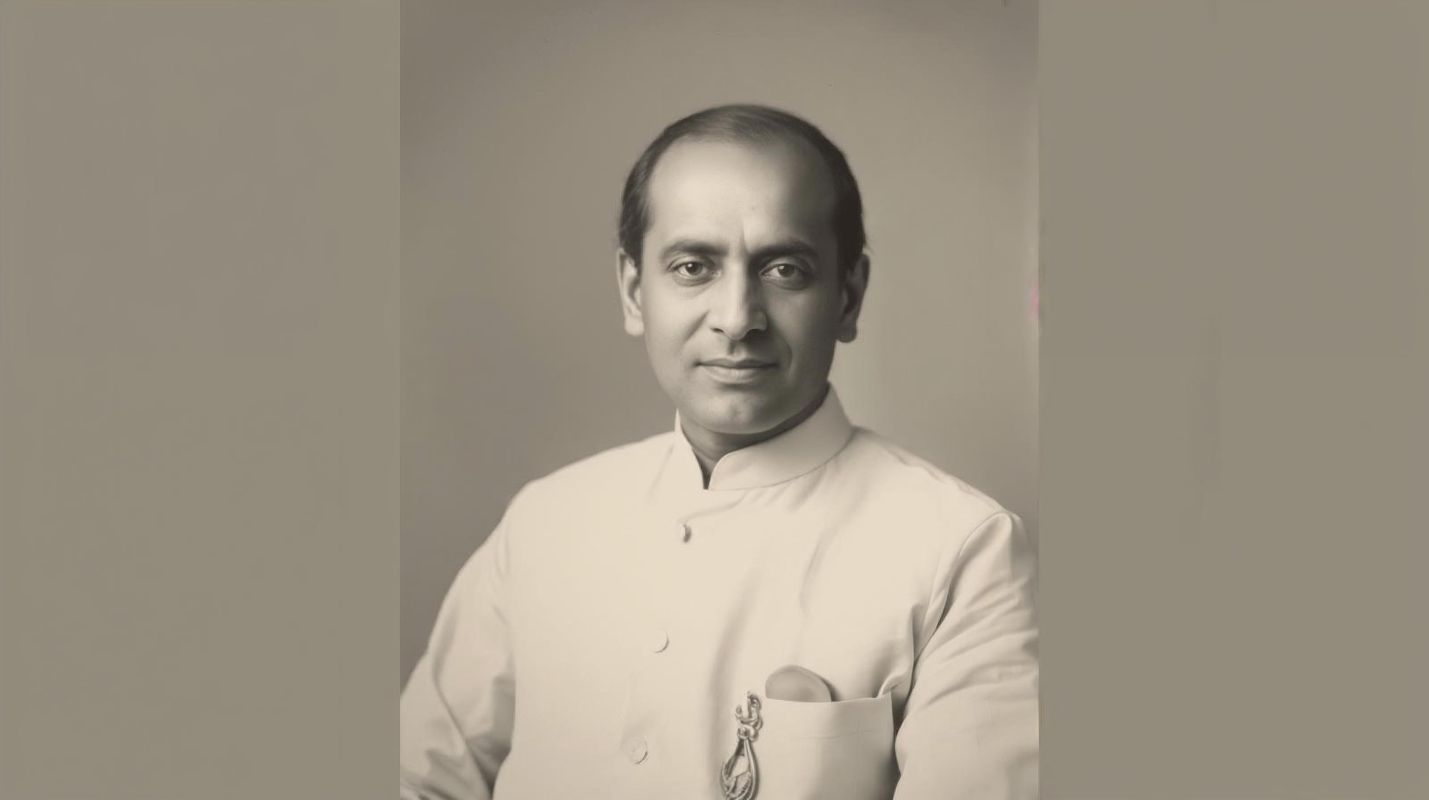
The man who rose to defend them was Bhulabhai Desai, an advocate from Bombay known for his intellect, composure, and firm belief that justice and freedom were inseparable.
Bhulabhai Desai was born on 13 October 1877 in Valsad, in present day Gujarat.
He studied at Elphinstone College, Bombay, where he completed his master’s degree in English Literature and History. His early career was in academia he taught English and History at Gujarat College in Ahmedabad.
While teaching, Desai developed a deep interest in law. After obtaining his legal qualifications, he was enrolled as an advocate at the Bombay High Court in 1905.
Within a few years, he earned recognition for his clear reasoning, knowledge of procedure, and ability to present complex issues with clarity rather than drama.
Desai’s reputation grew steadily in the Bombay High Court. He became one of the most respected Indian lawyers of his generation. Contemporaries described him as methodical, courteous, and committed to preparation. Judges valued his precision; colleagues often sought his advice.
For him, law was not a profession to win applause but a discipline of fairness. He maintained the belief that justice had to serve society, not merely the administration.
This outlook later drew him into questions far larger than contracts or property disputes questions of rights, equality, and national self-respect.
During the Bardoli Satyagraha of 1928, when farmers of Gujarat protested heavy land taxes, Desai offered his legal guidance to strengthen their cause. He argued that taxation without due consideration of economic hardship violated the very idea of just governance.
Though the campaign was largely political and led on the ground by Sardar Vallabhbhai Patel, Desai’s legal clarity gave it structure.
He also founded the Swadeshi Sabha, encouraging Indian industries and consumers to prefer locally made goods. By reasoning rather than rhetoric, he persuaded mill-owners and merchants to adopt national self-reliance in trade. Through these efforts, Desai’s work bridged economics, law, and patriotism.
In 1930, Bhulabhai Desai formally joined the Indian National Congress. His intellect and balanced temperament quickly made him a respected figure within the party.
He was elected to the Central Legislative Assembly in 1934, representing Gujarat.
Inside the Assembly, Desai was known for calm but firm criticism of colonial policy.
He questioned ordinances, defended civil rights, and reminded the government that legal order could not exist without moral legitimacy. Even British members acknowledged the strength of his constitutional arguments.
He often stated that good governance demanded dialogue rather than domination a position that made him a bridge between moderates and assertive nationalists.
The defining chapter of Desai’s life came with the INA Trials after the Second World War.
The British government charged the INA officers with waging war against the Crown and committing treason. For Indians, the trial represented something much larger a test of whether the Empire’s law could recognize the justice of a people’s desire for freedom.
Desai agreed to serve as chief defense counsel for the accused. The trial opened inside the Red Fort in November 1945. He was assisted by other senior lawyers, including Tej Bahadur Sapru, K. N. Katju, and Asaf Ali, while Jawaharlal Nehru and other Congress leaders offered public support.
Desai based his defense on international law and natural justice. He argued that the Indian National Army, formed under the provisional government led by Subhas Chandra Bose, was not a group of traitors but a regular force seeking liberation from foreign rule.
According to the principles recognized by the international community, he maintained, soldiers fighting under a proclaimed national government could not be treated as common criminals. His reasoning was meticulous. He relied on legal precedents, conventions of warfare, and the political realities of colonial subjugation. Observers described the trial as one of the most intellectually charged confrontations of the late colonial era.
While the court eventually pronounced guilty verdicts, the trial had an enormous political effect. Indian newspapers covered it daily; processions and demonstrations took place across cities. Public sympathy for the INA men spread rapidly, uniting Indians across regions and communities. Even senior British officials admitted privately that the proceedings had intensified demands for independence.
Through his calm, reasoned defense, Bhulabhai Desai gave the freedom movement a legal vocabulary showing that India’s case for independence could be argued not only through protest, but also through principle and law.
After the trials, Desai’s health declined. Years of intense work and stress had taken their toll, but he continued to participate in public life whenever possible. He remained active in the Congress and in constitutional discussions through 1946, always emphasizing that freedom must rest on legal order and fairness.
He passed away on 6 May 1946, less than fifteen months before India’s independence.
Colleagues in the legal fraternity and leaders across political lines expressed deep respect. His passing was widely mourned in Bombay, Gujarat, and Delhi, where he had argued some of the most important cases of his time.
Bhulabhai Desai’s contribution to India’s freedom struggle rests on two pillars his defense of the INA officers and his lifelong effort to link justice with national duty. He demonstrated that law could be a shield for truth even within an unjust system. His name endures today in Bhulabhai Desai Road in Mumbai and in historical accounts of the final decade of the British Raj.
Beyond memorials, his legacy lies in the belief that advocacy can be both intellectual and ethical that a lawyer’s highest allegiance is not to power, but to fairness.
As we continue our journey through the lawyers of India’s freedom struggle, Bhulabhai Desai stands as the quiet conscience of that era, a man who reasoned where others shouted, who believed that words could serve justice, and who showed that defending the accused could sometimes mean defending the nation itself. He did not live to see the dawn of freedom, but his arguments in the Red Fort Trials became part of the moral foundation on which that freedom rose.




1 Comment
Youre so cool! I dont suppose Ive read something like this before. So good to find anyone with some authentic thoughts on this subject. realy thanks for beginning this up. this web site is one thing that’s needed on the net, somebody with slightly originality. helpful job for bringing one thing new to the web!