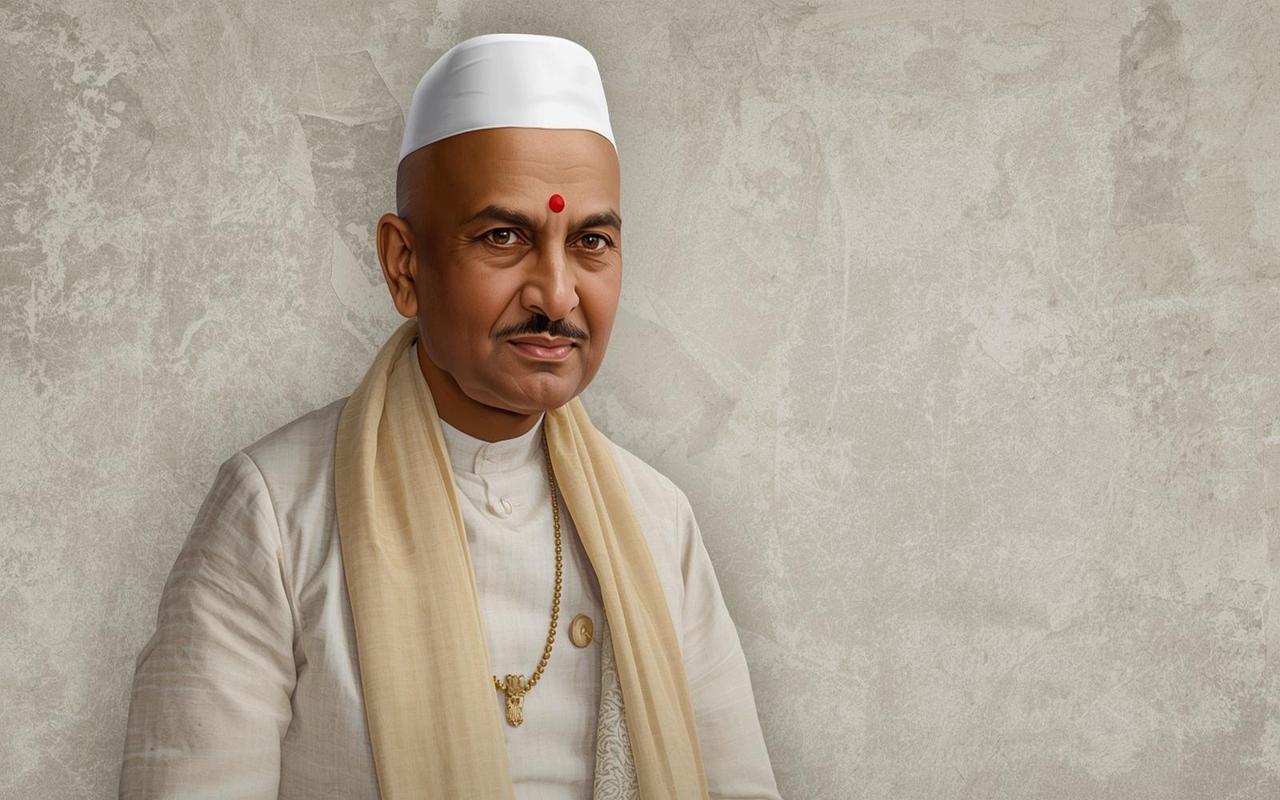
On a warm July morning in 1856, in the small coastal town of Ratnagiri, a child was born who would one day roar against an empire. His name was Bal Gangadhar Tilak. To the people of India, he would later become Lokmanya, the one accepted as leader by the masses. To the British, however, he was a dangerous agitator, a rebel who dared to turn law, faith, and philosophy into tools of resistance. This is his story not just as a political leader, but as a lawyer and thinker whose sharp mind and fearless pen shook the very foundations of colonial rule.
The Making of Tilak
Tilak grew up in a Chitpavan Brahmin household, surrounded by the rhythm of Sanskrit verses and the rigors of discipline. His father, Gangadhar Ramachandra Tilak, a respected Sanskrit scholar, instilled in him a love for learning. Tilak was brilliant as he could solve mathematical puzzles with ease, but what truly defined him was his refusal to bow to authority. Even as a student, he would not tolerate injustice or dishonesty.
After excelling in Mathematics at Deccan College, Tilak chose to study law at Government Law College, Bombay. By 1879, he had earned his law degree and was called to the bar. For many, the law was simply a profession but for Tilak, it became a language of power, the one he would later wield against the British Raj.
Tilak in the Courts: A Rebel’s Stage
Though Tilak did not spend years as a practicing advocate, the courtroom became one of his greatest stages. He knew the colonial law books as well as any British trained barrister, but he also knew how to turn the dock into a pulpit for nationalism.
The most famous of these battles were his sedition trials. In 1897, after the assassination of two British officials by Chapekar brothers, Tilak was accused of inciting violence through his fiery writings in Kesari, his Marathi newspaper. When he stood trial, Tilak did not beg for mercy. Instead, he challenged the prosecution, questioning the very fairness of a law that branded truth telling as treason. Convicted, he spent 18 months in prison, but his name spread across India as the voice of defiance.
Again in 1908, Tilak was arrested for his writings during the unrest following the bomb attack in Alipore. This time, the British sought to silence him with a harsher sentence. He was sent to Mandalay, Burma, for six years of rigorous imprisonment. For many, exile would have meant defeat. For Tilak, prison became a sanctuary of thought.
Law and Philosophy Behind Bars
It was in the solitude of Mandalay that Tilak turned to the Bhagavad Gita, not as a text of spiritual comfort but as a manual for action. Out of his prison years emerged Gita Rahasya (The Secret of the Gita), a philosophical masterpiece that redefined duty and resistance.
Tilak’s interpretation was radical for his time. While many read the Gita as a call to renunciation, Tilak saw in it the message of karma-yoga, active engagement in the world. He argued that true spirituality lay not in withdrawing from life’s struggles but in embracing them with courage and righteousness. For a nation in shackles, this was electrifying. The message was clear resisting injustice was not just political, but it was sacred duty.
Tilak’s legal mind shaped this philosophy. He wrote with the precision of a lawyer drafting an argument, dissecting verses, analyzing contexts, and presenting his case with irrefutable logic. Just as he had once challenged the colonial courts, he now challenged the passivity that colonialism bred.
Law in Service of Nationalism
Even outside the courtroom, Tilak’s legal instincts guided his politics. He understood that the British wielded law not as justice but as control. He studied the legal codes that denied Indians equal rights and exposed their hypocrisy through his speeches and writings.
Tilak’s campaigns for Swaraj (self rule) and Swadeshi (self reliance) often leaned on legal reasoning. He argued that taxation without representation violated the principles the British themselves claimed to uphold. He demanded reforms not as favors, but as rights. In this way, his training as a lawyer sharpened his voice as a nationalist.
The Philosopher/Patriot
Tilak’s mind was not limited to politics or law. He was a philosopher who saw India’s struggle for freedom as part of a larger moral battle. In Gita Rahasya, he declared that action, not withdrawal, was the path of true dharma. This philosophy inspired countless freedom fighters, from Gandhi to later revolutionaries, who saw in Tilak the blueprint for combining moral conviction with political action.
Unlike many of his contemporaries, Tilak did not shy away from mobilizing culture and religion. He revived the public celebration of Ganesh Chaturthi and Shivaji Jayanti, transforming festivals into platforms for unity and resistance. Here again, his philosophical bent was visible: he believed that law, religion, and society were intertwined, and that to awaken a people politically, one must first awaken them culturally.
Legacy of a Legal and Philosophical Mind
By the time of his death in 1920, Tilak had become a legend. Crowds thronged his funeral procession in Bombay, shouting slogans of freedom. His words, “Swaraj is my birthright, and I shall have it”, still thundered across India.
But beyond the slogan and the sedition trials, what remains most striking is how Tilak fused law and philosophy into the nationalist movement. He showed that the courtroom could be a battlefield, that philosophy could be a weapon, and that one man’s defiance could inspire millions.
In Tilak’s life, the lawyer, the philosopher, and the patriot were never separate identities, they were threads of the same fabric. And that fabric, woven with courage and conviction, became part of the banner under which India marched to freedom.
When I think of Tilak, I don’t just see a nationalist leader. I see a lawyer who understood the language of power, a philosopher who redefined duty, and a man who dared to tell an empire that its laws could not bind the spirit of a people. In telling his story, we are reminded that the fight for justice is never fought on one front alone, it is waged in courts, in classrooms, in books, and in the beating hearts of those who refuse to accept defeat. But Tilak’s fight was not only in the streets and courts; it was also in the realm of the spirit. In the silence of his prison cell, he turned to the Bhagavad Gita and found in its verses the philosophy of courage, action, and duty that could guide an enslaved nation. What he wrote there the “Gita Rahasya” was not merely commentary, it was a manifesto for freedom. And that is where we will go, in Part 2 of this journey into the heart of Tilak’s philosophy, where duty becomes destiny.





4 Comments
Your comment is awaiting moderation.
References:
Testosteron Tabletten kaufen
References:
https://pad.geolab.space/s/3NjZUTDXw
Your comment is awaiting moderation.
References:
Testosteron Tabletten rezeptfrei
References:
https://md.swk-web.com/s/ny6StTjDE
Your comment is awaiting moderation.
References:
Testosteron Tabletten pflanzlich
References:
https://pad.geolab.space/s/ciELWC3Ow
Your comment is awaiting moderation.
References:
Orillia casino
References:
https://funsilo.date/wiki/WinSpirit_Casino_Review_2026_Bonuses_Slots_More
Your comment is awaiting moderation.
References:
Casinos on line
References:
https://classifieds.ocala-news.com/author/rayonair32
Your comment is awaiting moderation.
References:
Crazy mass vs crazy bulk
References:
https://www.praxis-herzensgut.at/Blog/index.php/;focus=W4YPRD_com_cm4all_wdn_Flatpress_7044788&path=&frame=W4YPRD_com_cm4all_wdn_Flatpress_7044788?x=entry:entry220704-174723%3Bcomments:1
Your comment is awaiting moderation.
References:
Steroids for mass gain
References:
https://doc.adminforge.de/s/fSGF4VpNKN
Your comment is awaiting moderation.
References:
Anabolic steroids stacks
References:
https://marvelvsdc.faith/wiki/How_to_Buy_Marijuana_Online_in_the_United_States
Your comment is awaiting moderation.
References:
Gnc legal steroids
References:
https://liebstueckel.consulting/Mein-Blog/index.php/;focus=STRATP_com_cm4all_wdn_Flatpress_26122254&frame=STRATP_com_cm4all_wdn_Flatpress_26122254?x=entry:entry200214-051622;comments:1
Your comment is awaiting moderation.
References:
Anabolic steroids sale
References:
https://aryba.kg/user/cloudcanoe2/
Your comment is awaiting moderation.
References:
Steroids effects on the body
References:
https://socialisted.org/market/index.php?page=user&action=pub_profile&id=298427
Your comment is awaiting moderation.
References:
Weight gainer steroids
References:
https://pad.karuka.tech/s/6gZXHKh1la
Your comment is awaiting moderation.
References:
Winstrol tablets side effects
References:
https://hedgedoc.eclair.ec-lyon.fr/s/hvhVNa19R
Your comment is awaiting moderation.
References:
Anabolic steroid deca
References:
https://posteezy.com/bruleurs-de-graisses-quelles-marques-choisir
Your comment is awaiting moderation.
References:
Bodybuilding stores near me
References:
http://king-wifi.win//index.php?title=mcnultychung4082
Your comment is awaiting moderation.
References:
Penis on steroids
References:
https://www.instapaper.com/p/17437258
Your comment is awaiting moderation.
References:
Best steroid for muscle mass
References:
https://graph.org/Diversion-Control-Division-DEA-Consumer-Alert-01-17
Your comment is awaiting moderation.
References:
Best steroid for weight gain
References:
https://pad.geolab.space/s/Uy3-9Npav
Your comment is awaiting moderation.
References:
Is taking steroids illegal
References:
https://www.fsv-kappelrodeck.de/Home;focus=TKOMSI_com_cm4all_wdn_Flatpress_22523288&path=?x=entry:entry201008-104128%3Bcomments:1
Your comment is awaiting moderation.
References:
Legal form store
References:
https://www.grenzlandgruen.de/Blog;amp;path=getfile.php&focus=TKOMSI_com_cm4all_wdn_Flatpress_22892279&path=&frame=TKOMSI_com_cm4all_wdn_Flatpress_22892279?x=entry:entry221008-072511%3Bcomments:1
Your comment is awaiting moderation.
References:
Which body type is more common in men and associated with the most negative health risk?
References:
https://florencemasebe.co.za/Khadzi-s-Diary/index.php/;focus=AFRIHP_com_cm4all_wdn_Flatpress_2557736&path=&frame=?x=entry:entry160801-050248%3Bcomments:1
Your comment is awaiting moderation.
References:
Test 250 steroid
References:
https://www.ferien-sachsen.eu/Ihr-Weg-zu-uns/Saechsische-Schweiz-Blog/index.php/;focus=STRATP_com_cm4all_wdn_Flatpress_6958056&frame=STRATP_com_cm4all_wdn_Flatpress_6958056?x=entry:entry200207-163012;comments:1
Your comment is awaiting moderation.
References:
Diet pill that blocks fat absorption
References:
https://www.servus-nachbar.at/Neuigkeiten/index.php/;focus=W4YPRD_com_cm4all_wdn_Flatpress_7491266&frame=W4YPRD_com_cm4all_wdn_Flatpress_7491266?x=entry:entry250729-142804%3Bcomments:1
Your comment is awaiting moderation.
References:
Should i use steroids
References:
https://www.sperbys-musikplantage.de/index.php/;focus=STRATP_com_cm4all_wdn_Flatpress_21123190&path=&frame=STRATP_com_cm4all_wdn_Flatpress_21123190?x=entry:entry200210-163155%3Bcomments:1
Your comment is awaiting moderation.
References:
Android spinner example
References:
https://pin-it.site/item/596814
Your comment is awaiting moderation.
References:
Pre workout steroids
References:
https://jasminsideenreich.de/Blog/index.php/;focus=STRATP_com_cm4all_wdn_Flatpress_7099662&path=&frame=STRATP_com_cm4all_wdn_Flatpress_7099662?x=entry:entry200706-172335%3Bcomments:1
Your comment is awaiting moderation.
References:
Buzzluck casino
References:
https://may22.ru/user/spongequartz3/
Your comment is awaiting moderation.
References:
Tattslotto numbers saturday night
References:
https://urlscan.io/result/019d3040-6210-734c-a473-87f655b8e9fe/
Your comment is awaiting moderation.
References:
Online casino luxury
References:
https://urlscan.io/result/019c8386-e004-76da-8cfc-c136bcedb083/
Your comment is awaiting moderation.
can you use steroids safely
References:
http://hikvisiondb.webcam/index.php?title=steenewing7543
Your comment is awaiting moderation.
References:
Muscle building steroid pills
References:
https://telegra.ph/How-to-Legally-Buy-Testosterone-Online-A-Z-Guide-03-22
Your comment is awaiting moderation.
References:
Steroids pill form
References:
https://pad.geolab.space/s/uyu5oTLkr
Your comment is awaiting moderation.
ripped muscle extreme gnc
References:
https://dev.yayprint.com
Your comment is awaiting moderation.
what to stack with tren
References:
mozillabd.science
Your comment is awaiting moderation.
taking steroids and not working out
References:
https://skitterphoto.com/photographers/1202349/elliott-morse
Your comment is awaiting moderation.
References:
Casino catalogue
References:
https://urlscan.io/result/019d2aea-7960-727a-962c-d2575a93114e/
Your comment is awaiting moderation.
500 club casino
References:
topbookmarks.xyz
Your comment is awaiting moderation.
what are steroids prescribed for
References:
mixclassified.com
Your comment is awaiting moderation.
best place to buy injectable steroids
References:
bookmarks4.men
Your comment is awaiting moderation.
gnc build muscle fast
References:
complete-jobs.com
Your comment is awaiting moderation.
References:
https://md.swk-web.com/s/Lue5ugJ4-
References:
https://md.swk-web.com/s/Lue5ugJ4-
Your comment is awaiting moderation.
References:
enoticias.space
References:
https://enoticias.space/item/471890
Your comment is awaiting moderation.
arnold and steroids
References:
muhammad-ali.com.az
Your comment is awaiting moderation.
casino slot machine games
References:
may22.ru
Your comment is awaiting moderation.
spin games
References:
https://ariaqa.com/employer/hgh-somatropin-liquid-pen-90-iu-hilma-biocare-kaufen-preis-295-euro-online-in-deutschland/
Your comment is awaiting moderation.
grand parker casino
References:
bingwa.cc
Your comment is awaiting moderation.
casino club trelew
References:
audiorooms-radio.de
Your comment is awaiting moderation.
harrington casino
References:
https://noticias-sociales.site
Your comment is awaiting moderation.
dice odds
References:
craftsmansearch.com
Your comment is awaiting moderation.
lucky nugget mobile casino
References:
https://xclick.click/joannnowell00
Your comment is awaiting moderation.
silver reef casino
References:
http://humanlove.stream
Your comment is awaiting moderation.
casino la valentine
References:
miurl.do
Your comment is awaiting moderation.
Howdy just wanted to give you a brief heads up and let you know a few of the images aren’t loading properly. I’m not sure why but I think its a linking issue. I’ve tried it in two different browsers and both show the same outcome.
Simply desire to say your article is as amazing. The clarity on your put up is just spectacular and i could assume you are an expert in this subject. Well along with your permission allow me to clutch your RSS feed to stay updated with coming near near post. Thank you one million and please keep up the rewarding work.
Beautifully written about Tilak Ji. Most people know only about his slogans..but here you have given us so many insights about him! Especially the time & history behind creating ‘Gita Rahasya’ is really inspiring that how in desperate times one can turn towards sacred Indian texts and derive the way to live with head held high and so many more things…..such writings should reach to youth, children of our country who can learn the right way to live…will be waiting for the next post! Thank you
It truly means a lot. The idea behind this series is exactly that to bring out the lesser known sides of such great figures and inspire the younger generation. Glad you connected with it, and I’m excited to share the next part soon…
The great leader Tilakji knew the power of swadeshi and swaraj and inspired the freedom movement,at present scenario of the country still his thoughts and call are relevant.Demand of the day is swadeshi apna for self respect and to stand firmly against the colonial mindset of USA to dominate Bharat.jai hind.Inspiring note about Tilakji, his philosophy and thoughts still inspire india and world and are the base of a dignified human life.Nicely written ,best of luck.