From an “Accidental Lawyer” to an Educator: A Conversation with Sreya Chakraborty
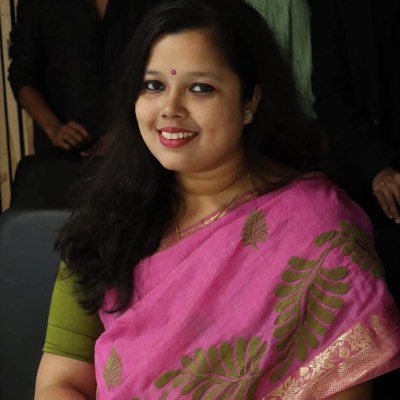
In this episode of The First Brief, we speak with Sreya Chakraborty, Assistant Professor of Law at Techno India, Kolkata. Her journey into law was not planned, but what followed is a story of adaptability, resilience, and finding one’s true calling in academia.
The First Brief Host: What inspired you to choose law as a career?
Sreya: I would describe myself as an accidental lawyer.
There was no legal background in my family my father is a civil engineer, my mother is a homemaker, and for generations, no one had pursued law. In that sense, I consider myself a “chain breaker.”
Initially, my mother wanted me to pursue medicine, but that didn’t work out. One day, she came across an entrance notification for the University of Calcutta and encouraged me to give it a try.
I appeared for the exam, cleared it, and suddenly, a completely new world opened up for me. That’s how the journey began and since 2012, there has been no turning back.
The First Brief Host: Was teaching always part of your plan, or did it happen along the way?
Sreya: It was never part of the plan.
I genuinely didn’t think I had the patience to become a teacher. My initial path was litigation. I was practicing as an advocate while completing my LL.M.
Then came the lockdown.
Everything slowed down. As a first-generation lawyer from a small town, I was already facing challenges limited exposure, difficulty in travelling, and uncertainty about opportunities. The lockdown only amplified those limitations.
When my LL.M. results came out, my professors and seniors suggested that I consider academia. I didn’t see myself that way, but they encouraged me to at least try.
In November 2020, I got my first opportunity and once I stepped into teaching, I realized something important:
This is not something I stumbled into. This is something I belong to.
I also went on to start my PhD, and since then, the journey has been flowing naturally.
The First Brief Host: Does legal education in India focus more on theory than practical exposure?
Sreya: To a large extent, yes.
Coming from a traditional university background, I’ve seen how heavily the system relies on theory. Even today, in many institutions, practical exposure is still secondary.
However, there is a shift happening.
In institutions like Techno India, we are consciously trying to bridge that gap. For example:
- Bringing in practicing advocates to interact with students
- Discussing recent legal developments in class
- Encouraging applied understanding instead of rote learning
But the transition is gradual. It will take time.
And this gap is the reason why many students feel completely lost when they first enter courtrooms. I experienced that myself, and it’s a very common reality.
The First Brief Host: What changes would you like to see in legal education?
Sreya: There needs to be a real balance between theory and practice.
Take subjects like family law or contract law these are taught in the first year, but often in a purely theoretical manner.
Instead:
- Students can be taken to family courts to observe real proceedings
- They can see how disputes are handled, how counselling works, and how judges approach reconciliation
- In subjects like contract law, even classroom simulations can help drafting mock agreements, understanding consideration, and seeing how terms operate in real scenarios
The more live examples students see, the clearer their concepts become.
Also, students today are highly tech-savvy but have shorter attention spans. Practical exposure not only improves understanding, but it also increases engagement.
The First Brief Host: In your opinion, what is one area of law that young lawyers often underestimate?
Sreya: Procedural law.
Many students focus only on subjects they enjoy or find interesting. Procedural laws like CPC, CrPC, and evidence are often ignored.
There’s also a mindset:
“Why study this now? I’ll deal with it later.”
But that “later” comes very quickly when you step into practice.
And that’s when reality hits.
Even I went through that phase. Most of us only truly understand procedural law when we are forced to apply it in real situations often under pressure from seniors or deadlines.
The First Brief Host: Are there any cases every law student should know, regardless of specialization?
Sreya: Yes, absolutely. There are certain landmark judgments that every law student should be familiar with because they shape the foundation of our legal system:
- Kesavananda Bharati v. State of Kerala
- Maneka Gandhi v. Union of India
- MC Mehta v. Union of India (Oleum Gas Leak Case)
- DK Basu v. State of West Bengal
- Vishaka v. State of Rajasthan
- Shreya Singhal v. Union of India
- Justice K.S. Puttaswamy v. Union of India
These cases shape fundamental legal principles across disciplines.
The First Brief Host: What was the biggest challenge in your early career?
Sreya: As an advocate, the biggest challenge was understanding how to function what to say, how to approach work, and how things actually operate in practice.
In academia, the challenge was different.
Coming from a traditional system where professors were less approachable, stepping into an environment where students freely interact and engage was a cultural shift.
I had to adapt not just as a teacher, but as a mentor.
Another challenge was implementing new ideas like organizing legal aid camps or introducing practical initiatives. Convincing authorities and students initially took effort.
But once those barriers were crossed, the journey became much smoother and much more fulfilling.
The First Brief Host: What advice would you give to final-year law students?
Sreya: Invest in your skills.
You can write many things on your CV, but ultimately, your skills speak for you. Even a short CV is enough if you have real competence.
Also, learn to manage stress. Law is not a short-term journey it’s a lifelong one. The ability to handle pressure will define your career.
And most importantly:
Always ask why, not just what.
Understanding the reason behind things will always take you further than memorization.
The First Brief Host: Has any moment made you feel, “This is why I teach”?
Sreya: Many moments.
There are students who come from rural backgrounds or non-English medium schools and struggle with confidence. They feel they won’t be able to survive in a competitive legal environment.
When they open up, seek guidance, and start improving that transformation is powerful.
Some of them:
- Perform well in internships
- Gain confidence in communication
- Go on to pursue higher studies
When they come back and say, “Ma’am, your guidance helped,” it creates a sense of fulfilment that is difficult to describe.
It’s like planting a seed without knowing how it will grow and then seeing it flourish.
The First Brief Host: A quote you live by?
Sreya: “Justice is a machine that, once given the starting push, rolls on of itself.” — John Galsworthy
Justice is a continuous process; it doesn’t simply end with a decision.
The First Brief Host: What advice would you give to a young woman from a small town who wants to enter law or academia?
Sreya: Never stop dreaming.
There will be obstacles. There will be people who discourage you. Ignore them.
If you have the capacity to dream, you have the capacity to build it.
Note: This conversation is a reminder that legal careers don’t always follow a fixed path. Sometimes, the most meaningful journeys begin by accident and evolve through persistence, adaptability, and self-belief.





1 Comment
I want to express my gratitude to Sreya Ma’am’s mother. If she hadn’t encouraged Ma’am to take the law entrance exam, we wouldn’t have such a fabulous professor today. We are truly blessed to have her as our professor:).